Ductless Mini Split AC System Sizing Installation Commissioning Best Practices
A correctly planned ductless mini split ac system gives homeowners precise, quiet, and energy-efficient comfort without ripping out walls for ductwork. Unlike DIY blurbs that treat these systems as “plug-and-play,” this guide goes deep: how to choose the right multi-zone architecture, why accurate load calculations matter, siting and line-set best practices, commissioning tests that actually protect your investment, how to optimize for heating in cold climates, and the routine care that keeps your system running efficiently for years. If you want a ductless mini split ac system that performs like the manufacturer promised — not one that underdelivers and triggers callbacks — read on.
Why a ductless mini split ac system delivers more than “another air conditioner”
A ductless mini split ac system is fundamentally a heat-pump based approach that moves heat between an outdoor condenser and one or more indoor air handlers. Each indoor head is independently controlled, allowing true zoning: you can cool or heat only the rooms that are occupied. Modern inverter compressors modulate speed to match load, reducing cycling losses and improving humidity control compared with conventional fixed-speed equipment. Because there are no ducts, you avoid distribution losses and the comfort problems caused by leaky or unbalanced ductwork. For retrofit projects, additions, or targeted comfort control (basements, sunrooms, bedrooms), a ductless mini split ac system is often the least invasive and most cost-effective option.
Start with a real load calculation — don’t size by square footage
The single most important decision for any ductless mini split ac system is correct sizing. Rules of thumb (e.g., X BTU per square foot) are unreliable because they ignore insulation, window orientation, ceiling height, internal gains, and local climate. A room-by-room Manual J (or equivalent) crawl identifies sensible capacities for each zone and prevents classic failure modes: oversized units that short-cycle and under-dehumidify, or undersized units that run continuously and never reach setpoint. If a multi-zone outdoor condenser will serve several indoor heads, aggregate the zones carefully and respect manufacturer maximum combined capacities and line-length limits — that combined calculation is what keeps the system stable and reliable.
Choosing indoor heads: style, placement, and comfort strategy
Indoor air handlers come in several forms: high-wall units, ceiling cassettes, floor consoles, and concealed-duct heads. High-wall units are the most common because they mix air effectively and are easy to maintain. Ceiling cassettes give even distribution in open plan areas, while concealed-duct units preserve interior aesthetics behind grilles. Placement matters more than head style. Locate heads to promote good mixing with natural room circulation rather than blowing directly on seating or beds; direct drafts cause complaints even when temperatures are met. Prioritize accessibility for filter cleaning and service access when planning head locations.
Outdoor condenser siting, vibration isolation, and airflow clearances
Siting the outdoor condenser for your ductless mini split ac system is not decorative — it affects sound, capacity, and longevity. Choose a level, stable pad with manufacturer-recommended clearances. Avoid tight alcoves that recirculate warm discharge air back through the coil. In snowy areas raise the condenser above typical snow level and maintain a clear service pathway. Use anti-vibration pads or spring isolators where the unit is mounted near living spaces to reduce structure-borne noise. Allow service access for technicians and leave a buffer so future replacement does not require moving plantings or hardscape.
Line-set routing, insulation, and oil management
Line-set length and vertical rise are key mechanical constraints on a ductless mini split ac system. Keep liquid and suction runs as short and direct as practical; long or highly vertical runs require special attention to oil return, possible intermediate oil traps, and precise refrigerant charge adjustments. Insulate the suction (larger) line with manufacturer-specified thickness to avoid condensation and energy loss. Support line sets to prevent sagging or stress on flare fittings. If you’re planning a multi-zone system with longer than recommended runs, consult the OEM guidance — some installs require additional service steps or factory options.
Electrical and condensate planning you can’t skip
Provide a dedicated electrical circuit and an accessible disconnect per code for each outdoor unit. Size conductors and breakers per the unit’s nameplate and local regulations. For condensate, design a positive slope to a gravity drain where possible; for high-wall units above an exterior grade consider a condensate pump with a reliable float and a protected power feed. Condensate routing failures are a common cause of indoor water damage complaints — do not improvise the drain path or rely on temporary solutions. Also ensure the indoor heads are placed so their condensate connections are accessible during service.
Refrigerant handling and the role of qualified technicians
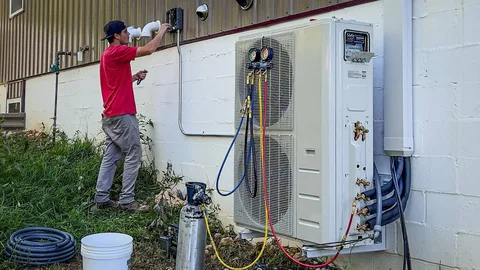
Some DIY-friendly ductless mini split ac systems are pre-charged for short line lengths and advertise easy install. However, any work that requires topping up refrigerant, brazing, or performing a final evacuation needs the appropriate tools and certifications. Proper evacuation to the specified micron level removes moisture and non-condensables; incorrect charge or trapped moisture reduces efficiency and risks compressor damage. If you lack experience with manifold gauges, vacuum pumps, and micron gauges, hire a certified HVAC technician for the refrigerant and final commissioning steps.
Commissioning: the step that makes or breaks long-term performance
Commissioning is not optional — it’s the single task that converts an installed ductless mini split ac system into a dependable system. Commissioning should verify refrigerant pressures and subcooling/superheat under load, measure supply and return temperature differentials, record compressor amp draw, confirm defrost operation in heat mode, and test controls and communication between indoor and outdoor units. Document baseline numbers — pressures, temps, amps, firmware — in a commissioning report. That baseline is your warranty insurance and the starting point if performance drifts with time.
Cold-climate operation and defrost behavior
If you rely on a ductless mini split ac system for primary heating, choose models rated for low-ambient performance. Modern inverter heat pumps maintain useful capacity at much lower outdoor temperatures than older models, but defrost cycles are inevitable in humid, sub-freezing conditions. During commissioning, observe defrost frequency and recovery time: excessive or lengthy defrost cycles point to placement or sensor issues. For very cold climates consider models with enhanced low-temperature kits, crankcase heaters, or integrated backup heat strategies to minimize auxiliary electric heat consumption.
Controls, zoning strategies, and smart integration
The zoned control that a ductless mini split ac system offers can unlock big efficiency gains if used intelligently. Use occupancy-aware schedules and setpoint setbacks for unoccupied zones. Avoid extreme setpoint swings that force rapid compressor modulation; instead schedule staggered warm-ups to meet comfort without excessive energy. Wi-Fi modules and smart thermostats add convenience but design critical automations to be local-first wherever possible so heating and safety are not reliant on cloud connectivity. Integrate with home automation for scene-based control (e.g., “movie mode” that coordinates shades and temperature), but keep essential functions robust without internet access.
Maintenance: monthly, annual, and what professionals should do
Routine care keeps a ductless mini split ac system efficient. Indoor filters should be cleaned monthly in heavy-use seasons and at least quarterly otherwise. Keep the outdoor coil clear of leaves and debris, and rinse coils annually with a coil-safe cleaner. Annually, a professional should check refrigerant charge, electrical connections, fan motors, and defrost behavior, and verify anchor bolts and line-set supports. Small preventive steps prevent compressor stress and extend useful life.
Troubleshooting common issues without guessing
Many service calls are avoidable with a methodical approach. If cooling or heating seems weak, check airflow and filters first. Inspect outdoor coil cleanliness and condenser fan operation next. If pressures or amp draw are abnormal, pull commissioning baseline numbers and compare; many issues can be traced to refrigerant charge or airflow restriction. For condensate leaks inspect drain slope and pump operation. Keep the commissioning report handy — having the original measured values speeds diagnosis and reduces unnecessary part swaps.
Lifecycle economics, incentives, and choosing value over lowest price
When evaluating the cost of a ductless mini split ac system consider total cost of ownership: initial equipment and installation, expected energy use, maintenance, and the intangible value of targeted comfort and quieter operation. Many utilities offer rebates for heat pump installations which materially improve payback. Because ductless systems permit zoning, real-world energy savings are often larger than theoretical ratings imply — you’re not conditioning unused rooms. Prioritize a quality install and commissioning over shaving a small amount from the purchase price; that investment avoids repeated callbacks and early replacements.
Practical checklist for homeowners before you sign the work order
Before committing to a ductless mini split ac system, insist on a written scope that includes a Manual J load calculation, line-length and elevation limits documented, proposed indoor head locations with photos, proposed condenser pad location, commissioning deliverables with baseline measurements, and a maintenance plan. Request the installer’s refrigerant handling certification and warranty details for parts and labor. These small contract items protect you from common disappointments.
Final thoughts
A ductless mini split ac system can be a transformative upgrade: quiet operation, excellent part-load efficiency, and precise zone control make it ideal for many retrofit and new-build scenarios. The difference between a system that delights and one that disappoints lies in planning, correct sizing, careful line-set work, rigorous commissioning, and routine maintenance. Treat those steps as essential engineering tasks, and your ductless mini split ac system will deliver comfortable, efficient climate control for many years.